-47%

Quibron-T
Price range: $ 67.62 through $ 973.96
Ranitidine
Price range: $ 161.13 through $ 483.38
Ranexa
Price range: $ 155.37 through $ 981.15
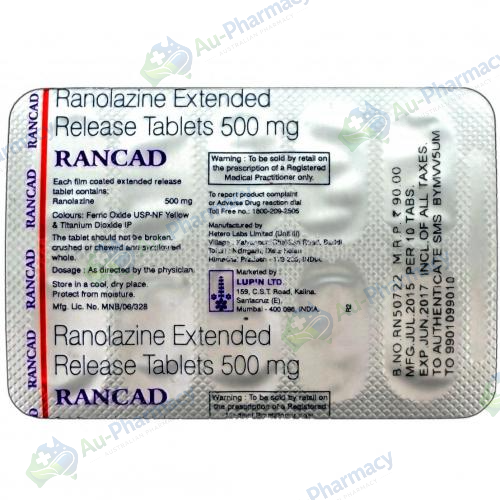
Ranexa is a medication designed to help manage chronic angina pectoris, a condition characterised by chest pain or discomfort due to reduced blood flow to the heart. It works by improving the heart’s ability to use energy more efficiently, thereby reducing the frequency of angina attacks. Ranexa can be used alone or in combination with other antianginal therapies. This treatment helps improve exercise capacity and overall quality of life for individuals with stable angina. Always follow the prescribed dosage for optimal results.
Active ingredient: Ranolazine
Delivery: 5–21 business days (depending on the shipping method selected)
Save an extra 10% with the discount code: EXTRA10
Each dosage option has its own packaging variants.
Description
Ranexa A Modern Approach to Managing Chronic Angina Pectoris and Improving Heart Function
Living with chronic stable angina can significantly impact daily life, limiting activity and causing discomfort. For many Australians, finding an effective and well-tolerated treatment is crucial to improving their quality of life. Ranexa, a unique anti-anginal medication, offers a distinct approach to managing this challenging condition. This detailed guide aims to provide you with comprehensive information about Ranexa, its benefits, proper usage, and how it can be a valuable part of your angina management plan.
Our online platform is dedicated to providing access to essential medications like Ranexa, ensuring that residents across Australia, from the bustling cities of Sydney and Melbourne to regional areas, can conveniently and reliably manage their health needs. We understand the importance of clear, accurate information when it comes to your medication, and we strive to empower you with the knowledge to make informed decisions in consultation with your healthcare provider.
Understanding Chronic Stable Angina and the Role of Ranexa
Chronic stable angina is a common manifestation of coronary artery disease, characterised by chest pain or discomfort that typically occurs with physical exertion or emotional stress and is relieved by rest or nitroglycerin. It arises when the heart muscle doesn’t receive enough oxygen-rich blood, usually due to narrowed coronary arteries. Managing angina effectively is vital not only for relieving symptoms but also for preventing more serious cardiovascular events.
While traditional treatments for angina often focus on reducing the heart’s workload or dilating blood vessels, Ranexa (ranolazine) operates through a different mechanism. It belongs to a class of drugs known as partial fatty acid oxidation inhibitors, but its primary anti-anginal effect is attributed to the inhibition of the late sodium current in heart muscle cells. This unique action helps to improve the heart’s electrical stability and its efficiency in using oxygen, leading to a reduction in angina symptoms.
How Ranexa Works: A Deeper Dive into its Mechanism
The heart’s ability to contract and pump blood relies on a complex interplay of electrical signals, which involve the movement of ions like sodium and calcium across cell membranes. In conditions like ischaemia (lack of oxygen), there can be an abnormal increase in a specific electrical current known as the late sodium current. This persistent late sodium current can lead to several detrimental effects within the heart muscle cells:
- It causes an overload of sodium inside the cell.
- This sodium overload, in turn, can lead to an accumulation of calcium within the cells via a sodium-calcium exchanger.
- Excess intracellular calcium can impair relaxation of the heart muscle, making the heart less efficient and increasing its oxygen demand, even at rest.
- It can also contribute to electrical instability, potentially predisposing to arrhythmias.
Ranexa specifically targets and inhibits this late sodium current. By doing so, it helps to restore the normal balance of ions within the heart muscle cells. This reduction in intracellular sodium and subsequent calcium overload results in:
- Improved relaxation of the heart muscle, enhancing its ability to fill with blood.
- Increased efficiency of oxygen utilisation by the heart, meaning it can perform its work with less oxygen.
- Reduced risk of certain types of arrhythmias associated with ischaemia.
This distinct mechanism makes Ranexa an important option, particularly for patients who have not achieved adequate symptom control with other anti-anginal medications, or for whom other treatments are not suitable. It is often used in combination with other anti-anginal drugs, such as beta-blockers, calcium channel blockers, or nitrates, to provide more comprehensive angina relief across Australia.
Benefits of Incorporating Ranexa into Your Angina Management
For individuals in Australia suffering from chronic stable angina, Ranexa offers several significant benefits:
- Reduced Angina Frequency: Clinical studies have shown that Ranexa can significantly decrease the number of angina attacks experienced by patients.
- Improved Exercise Tolerance: By enhancing the heart’s efficiency, Ranexa can allow individuals to engage in physical activity for longer periods without experiencing angina symptoms. This can lead to a greater ability to participate in daily activities and exercise.
- Better Quality of Life: Fewer angina episodes and improved exercise capacity often translate to an overall improvement in the patient’s quality of life, allowing them to lead more active and fulfilling lives.
- Effective as Monotherapy or Add-on Therapy: Ranexa can be prescribed as a standalone treatment when other anti-anginal agents are contraindicated or not tolerated. More commonly, it is used as an add-on therapy, enhancing the efficacy of other anti-anginal medications.
- Minimal Impact on Heart Rate and Blood Pressure: Unlike some other anti-anginal drugs, Ranexa typically has minimal effects on heart rate and blood pressure at therapeutic doses, which can be advantageous for patients who may not tolerate significant changes in these parameters.
Dosage, Administration, and Important Considerations
Ranexa is available as extended-release tablets and is typically taken twice daily, with or without food. The usual starting dose is 500 mg twice daily, which may be increased to 1000 mg twice daily based on patient response and tolerability. It is crucial to always follow the specific dosage instructions provided by your doctor and not to adjust the dose or stop taking the medication without consulting them.
When taking Ranexa, it is important to swallow the tablets whole. Do not crush, break, or chew them, as this can affect the extended-release properties of the medication and potentially lead to an overdose. Consistency in taking your medication at the same times each day is also key to maintaining stable drug levels and achieving optimal therapeutic effects.
Potential Side Effects and What to Watch For
Like all medications, Ranexa can cause side effects, although not everyone experiences them. Most side effects are mild to moderate and may diminish as your body adjusts to the medication. Common side effects include:
- Dizziness
- Nausea
- Constipation
- Weakness (asthenia)
- Headache
More serious, though less common, side effects can occur. It is important to seek immediate medical attention if you experience:
- Severe dizziness or fainting
- Irregular heartbeats or palpitations
- Signs of liver problems (e.g., yellowing of skin/eyes, dark urine, persistent nausea/vomiting)
- Kidney problems (e.g., decreased urine output, swelling in ankles/feet)
This is not an exhaustive list. Always discuss any concerns about side effects with your healthcare provider. For residents of Australia, your local emergency services are available for urgent medical assistance.
Drug Interactions and Precautions
Ranexa is metabolised by certain enzymes in the liver, particularly CYP3A4 and to a lesser extent CYP2D6. This means it can interact with other medications that affect these enzymes. It is absolutely critical to inform your doctor about all medications you are currently taking, including over-the-counter drugs, herbal supplements, and vitamins, to avoid potentially dangerous interactions.
Key drug interactions to be aware of include:
- Strong CYP3A4 inhibitors: Medications such as ketoconazole, clarithromycin, ritonavir, or diltiazem can significantly increase levels of Ranexa in your body, potentially leading to increased side effects. Co-administration is generally contraindicated or requires dose adjustment and careful monitoring.
- Moderate CYP3A4 inhibitors: Verapamil, erythromycin, and grapefruit juice can also increase Ranexa levels.
- CYP3A4 inducers: Rifampicin, phenytoin, carbamazepine, or St. John’s Wort can decrease Ranexa levels, reducing its effectiveness.
- Drugs that prolong the QT interval: Ranexa itself can cause a dose-dependent prolongation of the QT interval on an electrocardiogram (ECG). Therefore, caution is advised when co-administering with other medications known to prolong the QT interval, as this can increase the risk of serious heart rhythm disturbances.
Certain patient populations require special consideration:
- Patients with liver impairment: Ranexa should be used with caution, and lower doses may be necessary. It is contraindicated in patients with severe hepatic impairment.
- Patients with kidney impairment: Dose adjustment may be needed, and it should be used with caution in patients with moderate to severe renal impairment.
- Elderly patients: May be more susceptible to side effects.
Always ensure your prescribing doctor is aware of your full medical history and all current medications to ensure safe and effective use of Ranexa.
Detailed Characteristics of Ranexa (Ranolazine)
To provide a comprehensive overview, here is a detailed table outlining the key characteristics of Ranexa:
| Characteristic | Description |
|---|---|
| Active Ingredient | Ranolazine |
| Drug Class | Anti-anginal agent; Inhibitor of the late sodium current (INa) |
| Primary Indication | Treatment of chronic stable angina pectoris in adults who are inadequately controlled or intolerant to first-line anti-anginal therapies. |
| Mechanism of Action | Selectively inhibits the late phase of the inward sodium current (INa) in cardiac myocytes during repolarisation. This reduces intracellular sodium and calcium overload, improving myocardial relaxation and reducing oxygen demand. |
| Formulation | Extended-release tablets |
| Common Strengths Available | 500 mg, 1000 mg |
| Usual Dosing Regimen | Initially 500 mg orally twice daily. May be increased to 1000 mg orally twice daily based on clinical response and tolerability. To be taken with or without food. |
| Absorption | Well absorbed after oral administration. Peak plasma concentrations are reached between 2-5 hours. |
| Metabolism | Extensively metabolised primarily by CYP3A4 and, to a lesser extent, CYP2D6 enzymes in the liver and gut. |
| Elimination | Excreted primarily in urine (75%) and faeces (25%). Terminal half-life is approximately 2-3 hours for immediate release, and 7 hours for extended-release formulations. |
| Effects on Heart Rate & Blood Pressure | Minimal effects on heart rate and blood pressure at therapeutic doses. |
| QT Interval Prolongation | Can cause a dose-dependent prolongation of the QT interval. Caution required when co-administered with other QT-prolonging drugs. |
| Contraindications | Severe hepatic impairment, concomitant use with strong CYP3A4 inhibitors (e.g., ketoconazole, clarithromycin, ritonavir), pre-existing severe renal impairment (creatinine clearance < 30 mL/min). |
| Common Side Effects | Dizziness, nausea, constipation, asthenia (weakness), headache. |
| Serious Side Effects (Rare) | Severe dizziness/fainting, irregular heartbeats, liver problems, kidney problems. |
| Special Populations | Caution in elderly, moderate renal impairment, moderate hepatic impairment. |
| Pregnancy & Lactation | Not recommended unless benefits outweigh risks. Consult a doctor. |
| Storage | Store below 30°C in a dry place. Keep out of reach of children. |
Why Choose Our Online Pharmacy for Your Ranexa Needs?
When it comes to managing a chronic condition like angina, reliability, convenience, and access to accurate information are paramount. Our online pharmacy provides a trusted solution for obtaining your Ranexa medication across Australia. We are committed to offering a streamlined and secure service that prioritises your health and peace of mind.
- Nationwide Delivery: Whether you’re in the heart of Sydney, the vibrant streets of Melbourne, or a remote regional town, we ensure prompt and discreet delivery of your medication directly to your door.
- Authenticity Guaranteed: We source all our medications, including Ranexa, from reputable Australian suppliers, guaranteeing that you receive genuine, high-quality products.
- User-Friendly Experience: Our platform is designed for ease of use, making the process of finding and ordering your medication straightforward and hassle-free.
- Commitment to Information: We provide detailed, evidence-based information on all our products, empowering you with the knowledge needed to manage your health effectively in consultation with your healthcare provider.
Please note that in Australia, Ranexa is a prescription medication. While our online pharmacy offers a convenient way to purchase your prescribed medication, it is essential that you have a valid prescription from a registered Australian doctor. We facilitate the fulfilment of your doctor’s orders, ensuring you receive the medication you need responsibly and safely.
Popular Questions About Ranexa Answered
Understanding your medication is vital. Here are some of the most frequently asked questions about Ranexa:
-
What is Ranexa used for?
Ranexa is used to treat chronic stable angina, which is chest pain or discomfort caused by reduced blood flow to the heart. It is typically prescribed for adults who have not found adequate relief from other anti-anginal medications or cannot tolerate them.
-
How quickly does Ranexa start working?
While some patients may feel an improvement in their symptoms within a few days, the full benefits of Ranexa in reducing angina frequency and improving exercise tolerance may take several weeks to become apparent. It’s important to continue taking it as prescribed, even if you don’t feel an immediate change.
-
Can I take Ranexa with other heart medications?
Ranexa is often prescribed in combination with other heart medications, such as beta-blockers, calcium channel blockers, or nitrates, to provide more comprehensive angina control. However, it can interact with certain drugs, so always inform your doctor about all medications you are taking to ensure safe co-administration.
-
What should I do if I miss a dose of Ranexa?
If you miss a dose, take it as soon as you remember. However, if it is almost time for your next scheduled dose, skip the missed dose and resume your regular dosing schedule. Do not take a double dose to make up for a missed one.
-
Are there any foods or drinks I should avoid while taking Ranexa?
Yes, grapefruit and grapefruit juice can increase the levels of Ranexa in your body, potentially leading to increased side effects. It is advisable to avoid consuming grapefruit products while on Ranexa therapy.
-
Can Ranexa be crushed or chewed?
No, Ranexa tablets are extended-release, meaning the medication is released slowly over time. Crushing, breaking, or chewing the tablets can disrupt this mechanism, leading to a rapid release of the drug and potentially an overdose. Always swallow the tablets whole.
-
How long will I need to take Ranexa?
Ranexa is typically prescribed for long-term management of chronic stable angina. Your doctor will assess your condition regularly and determine the appropriate duration of treatment based on your response and ongoing needs.
-
Can Ranexa cause changes in my heart rhythm?
Ranexa can cause a dose-dependent prolongation of the QT interval, which is an electrical measurement of heart activity. While often not clinically significant, it means caution is needed, especially if you have certain pre-existing heart conditions or are taking other medications that also affect the QT interval. Your doctor may monitor your heart rhythm with an ECG.
Australian Perspectives: Testimonials from Ranexa Users
Hearing from others who have experienced the benefits of a medication can provide valuable insight. Here are two fictional testimonials from individuals in Australia who have used Ranexa:
“For years, my daily walks along Bondi Beach in Sydney were becoming shorter and more difficult due to my angina. I was already on a beta-blocker, but still experiencing frequent chest pain. My cardiologist suggested adding Ranexa to my regimen. After a few weeks, I noticed a significant difference. I could walk further, enjoy the fresh air, and even keep up with my grandkids more easily. It really has given me back a part of my life I thought was gone. Ordering it online has also been incredibly convenient for me.” – Margaret S., 68, Sydney, NSW
“As a retired tradesman from Melbourne, I’m used to being active, but my stable angina was making even simple tasks around the house a struggle. My doctor prescribed Ranexa when my previous medication wasn’t cutting it anymore. I was a bit sceptical at first, but within a month, the number of angina attacks I had dropped considerably. I can now potter in my garden for longer without needing to stop and rest every few minutes. It’s made a real difference to my independence and overall wellbeing. The ease of getting my prescription filled and delivered through this online service has been a bonus.” – Kevin R., 74, Melbourne, VIC
Conclusion: Empowering Your Angina Management Journey
Managing chronic stable angina is an ongoing journey that requires effective treatment and informed choices. Ranexa stands as an important and distinct option in the therapeutic landscape for patients across Australia, offering a unique mechanism of action to reduce angina symptoms and improve exercise tolerance. By understanding how Ranexa works, its benefits, and important considerations, you can collaborate more effectively with your healthcare provider to achieve better control over your condition.
Our commitment is to support your health journey by providing convenient, reliable access to essential medications like Ranexa. We encourage you to always consult with your doctor or pharmacist for personalised medical advice and to ensure Ranexa is the right choice for your specific health needs. Once you have a valid prescription, we are here to ensure you receive your medication efficiently and with the utmost care, delivered wherever you are in Australia.
Additional Information
| Dosage |
500mg |
|---|---|
| Package |
30 pills ,60 pills ,90 pills ,120 pills ,180 pills ,270 pills ,360 pills |
| Active Ingredient |
Ranolazine |
| Active ingredient |
Related Products
Arjuna
Price range: $ 192.78 through $ 220.11Active ingredient: Arjuna (Terminalia arjuna) Bark Extract